
-
Technical
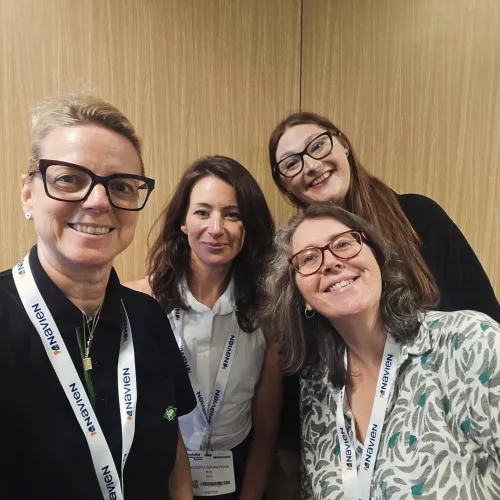 A joint effort this month, although the idea was all Lisa Waters. Have you thought about the Power in the Industry you work in, the place that you take in it and the importance of the role you play? Here we write about the RACHP industry, but it is true for all. Whether you work in a huge company or from your home in a small team.
 Until next month, Powerful Reader.
The Power of Community and Network in the RACHP Sector
The refrigeration, air conditioning and heat pump sector has always been built on more than equipment and regulations. At its core are the individuals all working independently to be one of the important cog of our industry.
Engineers, designers, manufacturers, academics, trainers, contractors, support staff and policymakers all play a role, and it is the strength of the connections between them that often determines how far the sector can progress.
Community matters because the challenges facing RACHP are complex and fast-moving. Decarbonisation targets, refrigerant transitions, skills shortages and evolving standards affect everyone, but no single organisation has all the answers. When professionals share experiences, lessons learned and practical solutions, the whole sector benefits. One conversation at a conference, workshop or site visit can shave real time off trial and error elsewhere.
Strong networks also support innovation. New technologies and approaches gain momentum more quickly when there is trust between stakeholders. Manufacturers can receive clearer feedback from installers. Training providers can better understand real-world needs. Policymakers can hear directly from those working on the front line. These links help ensure that innovation is practical, safe and commercially realistic.
Equally important is the role of community in developing people. For those entering the sector, networks provide guidance, confidence and a sense of belonging. For experienced professionals, they offer opportunities to mentor, influence best practice and stay connected to emerging trends. In an industry where knowledge is often built over decades, passing it on is vital.
Events, trade associations, technical groups and informal peer networks all contribute to this sense of shared purpose.
As the RACHP sector continues to evolve, the power of community will only grow. Technology may drive change, but it is people, connected through strong networks, who turn ambition into action. These connections also play a vital role in developing people. New entrants benefit from access to experienced professionals who are willing to guide and encourage them. Established practitioners stay sharp by engaging with peers, questioning assumptions and learning from different perspectives.
Informal networks all help maintain this sense of shared purpose. They create spaces where challenges can be discussed openly and solutions shaped collectively. And we are extremely fortunate that we are surrounded by people who give their time and knowledge for good use in all realms of HVAC.
As the sector adapts to new technologies, regulations and expectations, this culture of cooperation will remain one of its greatest strengths. A connected community does not just respond to change. It helps lead it.
So, to conclude. Your own contributions are the real power as a member of this community, this industry. You possibly may not feel seen or heard all the time. If this is the case, you are probably supporting and enabling someone who is. An absolutely essential link in the cool chain. No one person can do it all. We have a strong industry with a great community, and it is heartwarming to see what we are achieving together. Look around, and you can see it. If you lead, then recognise who is behind you and supporting you and pushing you forward.
Your power is that you are part of something bigger. And you are needed. We look forward to seeing where the next decade will take us, together.
Strong networks also support innovation. New technologies and approaches gain momentum more quickly when there is trust between stakeholders. Manufacturers can receive clearer feedback from installers. Training providers can better understand real-world needs. Policymakers can hear directly from those working on the front line. These links help ensure that innovation is practical, safe and commercially realistic.
Equally important is the role of community in developing people. For those entering the sector, networks provide guidance, confidence and a sense of belonging. For experienced professionals, they offer opportunities to mentor, influence best practice and stay connected to emerging trends. In an industry where knowledge is often built over decades, passing it on is vital.
Sitemap